- About
-
Projects
- Projects
-
Projects in Africa
- Overview
- Connecting off-grid girls to off-grid energy
- Regional hospital centre electricity project
- Installing photovoltaic systems and creating a MOOC for training
- Improvement of working conditions for women in Senegal
- Connection of the hospital centers of Beni
- Women Solar Academy
- Acteurs
- Solar energy for better health in Ivory Coast
- Rural entrepreneurship around innovative productive uses of electricity
-
Projects in Latin America
- Overview
- Provide solar photovoltaic systems to families living off-the-grid
- Provide accessibility for rural communities to a low-voltage electrical sytem
- Installation of solar panels for the Resilient Medical Centers
- Solar street lights installation in Bongaba
- Luz al Barrio
- Electrical Kits for houses
- Building safe community places
- Multi-regional project
- Partners
- Newsroom
- Call for Projects
- Contact us
Solar
A glimpse in the time : story of impact in the Bongaba community
Jan 21, 2026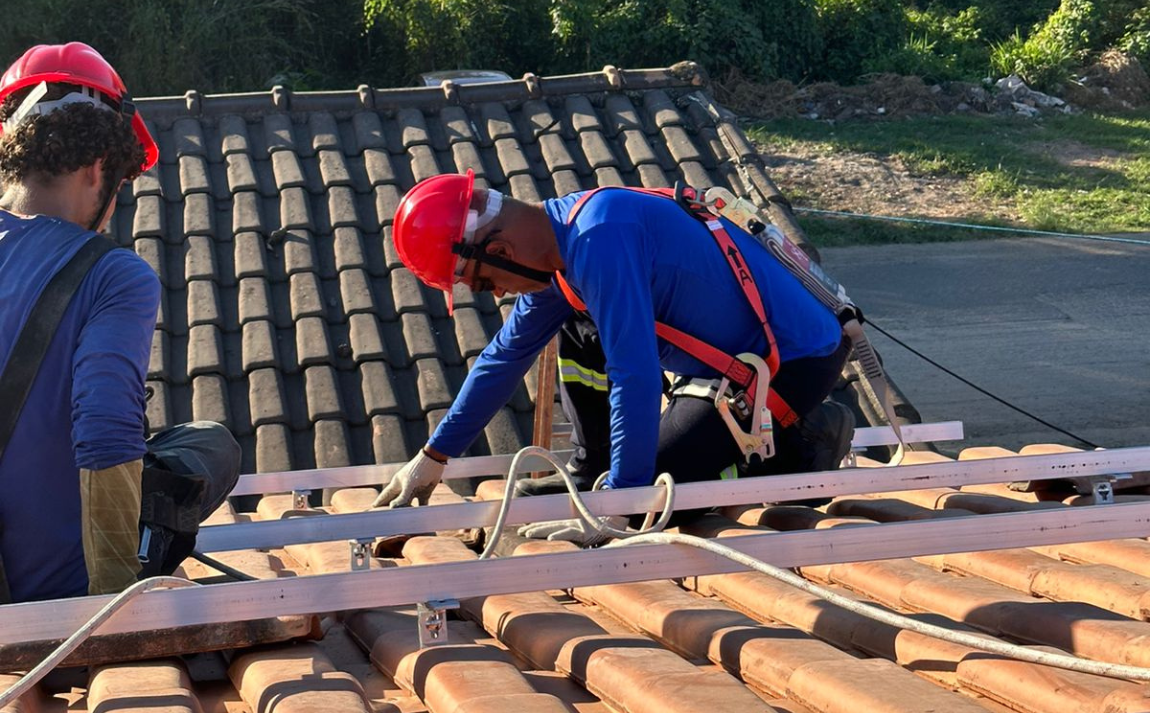
Solar panel installation in Bongaba
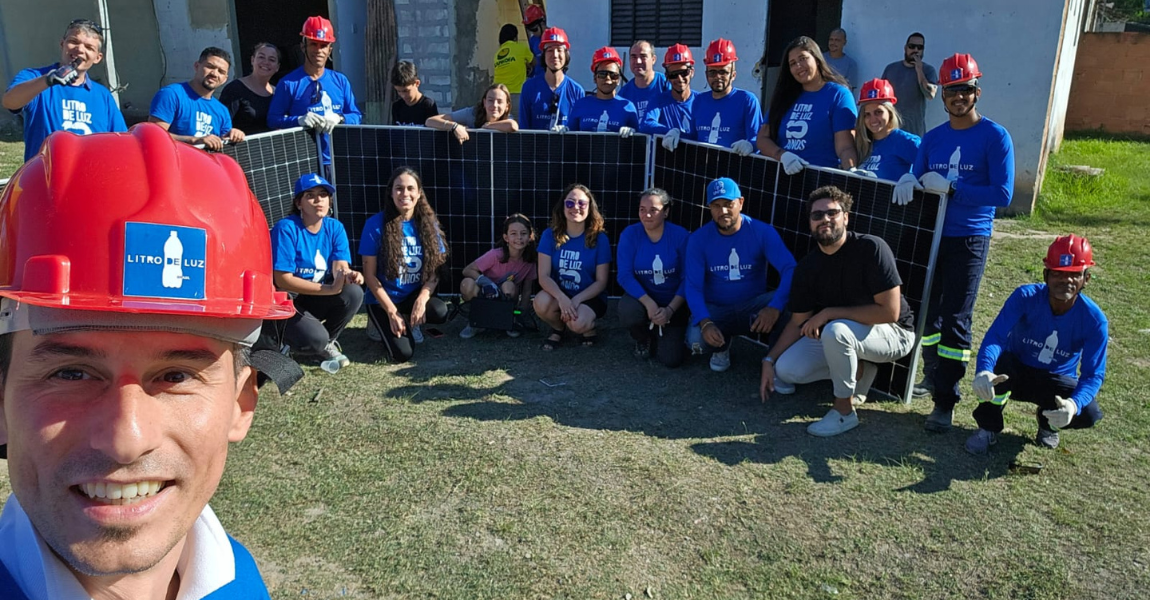
In 2023, Litro da Luz with the support of the Fondation Nexans went to Bongaba community to install solar poles and help people to improve their life condition. Two years later, the NGO went back to the community to see what happened and if our common work made a difference on the field.
What makes the Fondation Nexans efficient? Impact. It is all about the change we bring into the society. When the Fondation chooses to support a project, it has to change lives of people concerned. That is the story of the Bongaba community.
When night fell over the Bongaba community in 2023, darkness was everywhere. No safety, less mobility, immobilized lives. Side streets disappeared after sunset, residents relied on improvised lamps, and simple routines like returning from school or visiting neighbors became risky. Two years later, the story of Bongaba is no longer defined by what it lacked.
Bongaba is now the reflection of collective action, community leadership, and efficient solutions made possible.
Between 2023 and 2025, Bongaba, a quilombola community in Magé (RJ) home to around 120 families, experienced a profound transformation in how residents live, move, and feel at night. The change began with a targeted intervention by Litro de Luz Brasil, in partnership with the Fondation Nexans and Nexans Brasil, and matured into a broader structural improvement with the arrival of public lighting—an outcome that underscores both the impact and effectiveness of the initial action.
Lighting where the need was greatest
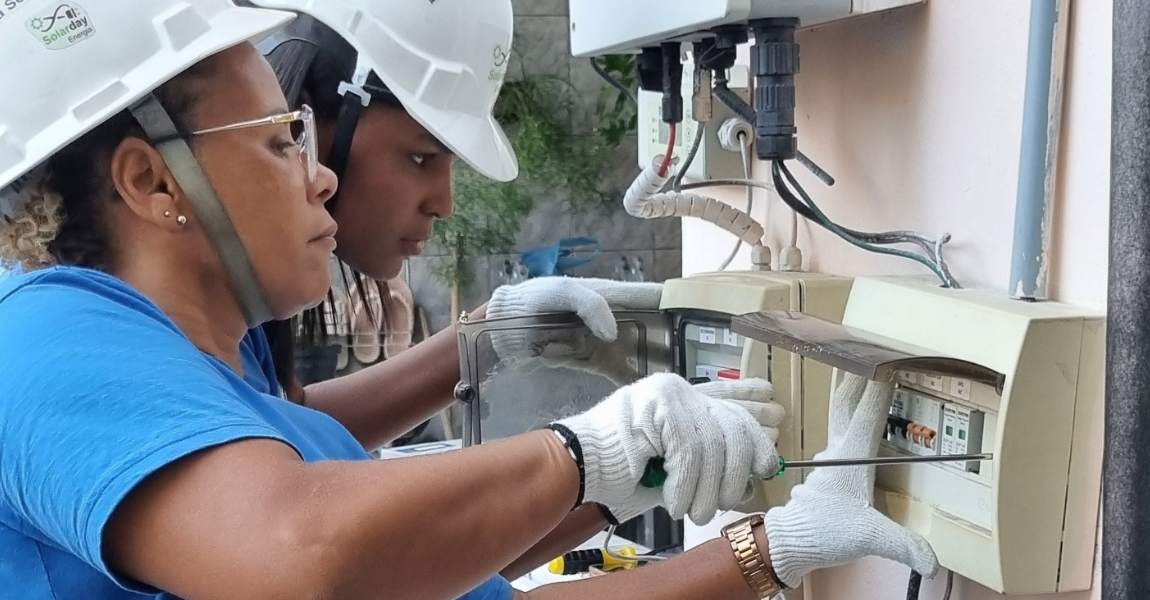
The project’s origins date back to June 2022, when Bongaba was identified as an area of high vulnerability within Nexans’ sphere of influence. At the time, only the main road had any form of public lighting. Most side streets were completely dark, and many homes depended on irregular or unsafe indoor connections. After a technical assessment confirmed feasibility, 30 solar lamp posts were installed on April 29, 2023, precisely in the areas without electricity, prioritizing families most exposed to risk
The impact was immediate. More than 368 people benefited directly from clean, renewable lighting that extended well beyond illumination. In 2023, residents described the intervention as life-changing. “It changed our lives a lot, being able to do things, the kids playing, and us being at ease. It’s very good,” one resident said at the time. Another added simply, “What you did for us here is gratifying, there are no words to describe it.”
These early testimonies were not isolated emotional responses; they foreshadowed measurable social change.

Safety, mobility, and daily life after dark
In 2023, perceptions of lighting quality in Bongaba were overwhelmingly negative. More than 65% of residents rated lighting as “Very Poor,” while the rest classified it as “Poor.” That same year, nearly 60% of respondents reported feeling unsafe in the community at night, and half identified walking after dark as a significant risk
By 2025, those numbers had shifted dramatically.
The proportion of residents who reported feeling safe or very safe rose from 40.7% to 73.3%, representing a 32.6% increase in perceived safety. Meanwhile, feelings of insecurity dropped just as sharply, falling from 59.4% to 26.7%. Even more telling, the perception of risk when walking at night decreased from 50% to just 13.3%
For residents, these statistics translated into tangible freedom. “I get home from college at 11 p.m. and now I feel safer,” one resident shared, reflecting how lighting expanded educational and professional possibilities. Others highlighted the return of simple social practices such as visiting neighbors, sitting outside or children playing. All activities, once restricted by darkness.
perception of risk when walking at night in 2025
residents who reported feeling safe or very safe in 2025
From temporary Solution to structural change
One of the clearest indicators of the project’s efficiency lies in what happened next.
By April 2025, when Litro de Luz Brasil returned to Bongaba to measure impact and support maintenance, the community had begun receiving official public lighting from the State. Data collected at that time showed that 93.3% of households were now served by generator-powered public lamp posts, while only 6.7% still relied on Litro de Luz installations. Lighting quality perceptions had also shifted decisively: 80% of residents rated lighting as “Good” and 6.7% as “Very Good”
Rather than rendering the original project obsolete, this transition validated its purpose. The solar lamp posts filled a critical gap, demonstrated feasibility, and strengthened the community’s visibility and advocacy capacity—contributing to the arrival of permanent public infrastructure.
As one resident noted in 2025, “I prefer Litro’s lamp post to the city hall’s lighting because it really works and is free.” Another acknowledged the project’s closure with mixed feelings: “Sad that the project ended, but very thankful.”
Community Autonomy at the Center
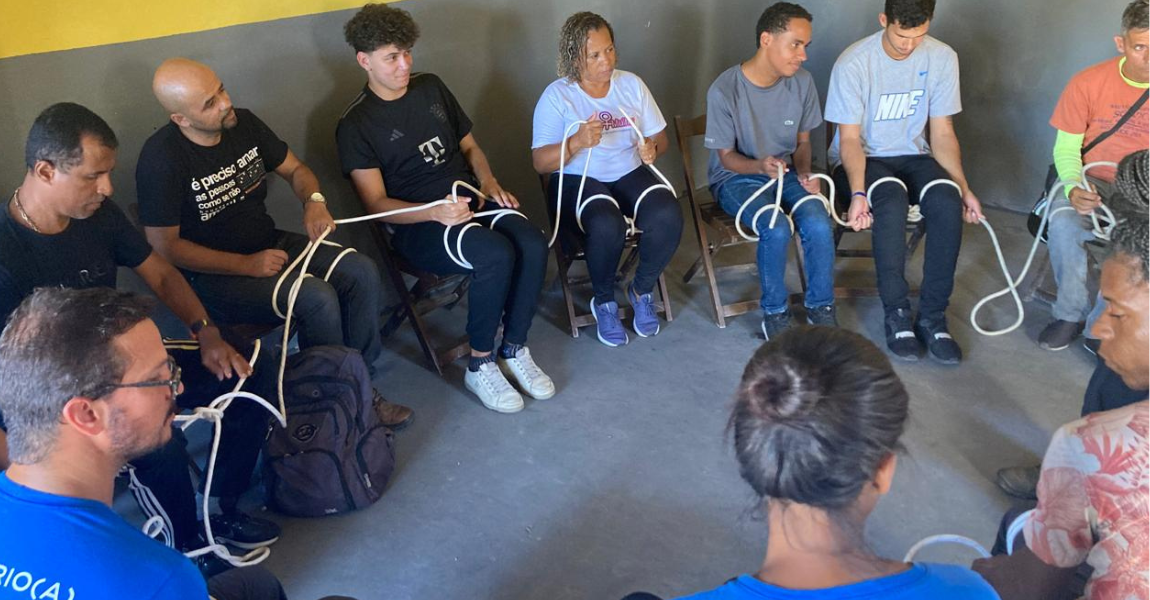
A key factor behind the project’s sustainability was the training of seven local Ambassadors : five women and two men, responsible for basic maintenance and community engagement. This strategy ensured that the technology did not remain an external solution but became embedded in local knowledge and leadership.
When public lighting finally arrived, it was the Ambassadors themselves who informed Litro de Luz Brasil that the solar posts could be removed and reused elsewhere. The dismantling process was conducted collaboratively, with coordination between local teams in Rio de Janeiro and the national organization, reinforcing a model based on autonomy, efficiency, and responsible resource use
The same equipment could now bring light to other communities still waiting in the dark.
“ May it keep bringing light ”
Bongaba inhabitantLight as a catalyst for development
Beyond safety, lighting reshaped how Bongaba residents used their time and space. In 2025, the most frequently cited uses of nighttime lighting included moving around the community (14%), feeling safer (13%), cooking and eating (11%), and visiting family and friends (11%). Studying (9%), leisure (10%), and work (7%) also featured prominently, revealing how access to light supports education, income generation, and social cohesion .
These findings reinforce what residents had already expressed back in 2023: “I liked the initiative, it will positively impact community life and make me more active at night, bringing more safety.”
A model that works
The Bongaba experience illustrates how targeted, well-executed social technology can produce results that outlast the intervention itself. By prioritizing the most vulnerable areas, investing in local leadership, and maintaining follow-up through impact measurement, Litro de Luz Brasil demonstrated that efficiency in social action is not about permanence—but about relevance, timing, and empowerment.
As Bongaba’s streets remain lit today, the project’s true legacy lies not only in brighter nights, but in a community that walks those streets with confidence. Or, as one resident put it simply: “May it keep bringing light.”